For established businesses with a proven product or workflow
Your business already works. Here’s how to put it in your customers’ pockets.
One user, one workflow, one branded app for iOS and Android, carried from definition to store submission in 90 days or less. No separate mobile team to hire, and no roadmap hiding inside the first release.
 Kuan, founder of Prodmake
 Customers or staff keep asking for an app. You know exactly which job it should do: book, order, check in, report, track. But the moment you look into it, mobile turns into a project of its own, with designers, iOS, Android, testing, release and store listings.
So it waits. Or it starts, and the first version quietly grows into the whole roadmap.
Why business apps stall
Usually for one of three reasons. Mobile becomes another team to coordinate, split across people before a single user gets anything. The release work starts too late: signing, screenshots, privacy details and reviewer access turn up after everyone thinks the app is done. And the scope expands until one useful workflow is buried under every future feature.
One app, one user, one complete workflow
We keep the first app narrow on purpose. Bring what already works, whether that’s a service, a web product, an API or a prototype, and we carry one customer or operator journey all the way into the stores:
- We agree one mobile outcome: one user, one workflow, the technical starting point, the native features it needs and written acceptance criteria.
- We build it on a production foundation: the branded app, product rules, data connection and the native behavior you accepted, for iOS and Android together.
- We verify, package and submit: signed builds, screenshots, store text, and submission through your own developer accounts.
Once the launch packet and access are ready, the app is submitted in 90 days or less. Apple and Google control their own review timing, so approval sits outside that window.
Two quick questions about the business to start. A person reads every brief.
Apps that actually reached the stores
We’ve shipped our own apps end to end. Reader AI took accounts, sync and content workflows through cross-platform releases. Coordinates shipped background location capture, reports and sharing to both stores.
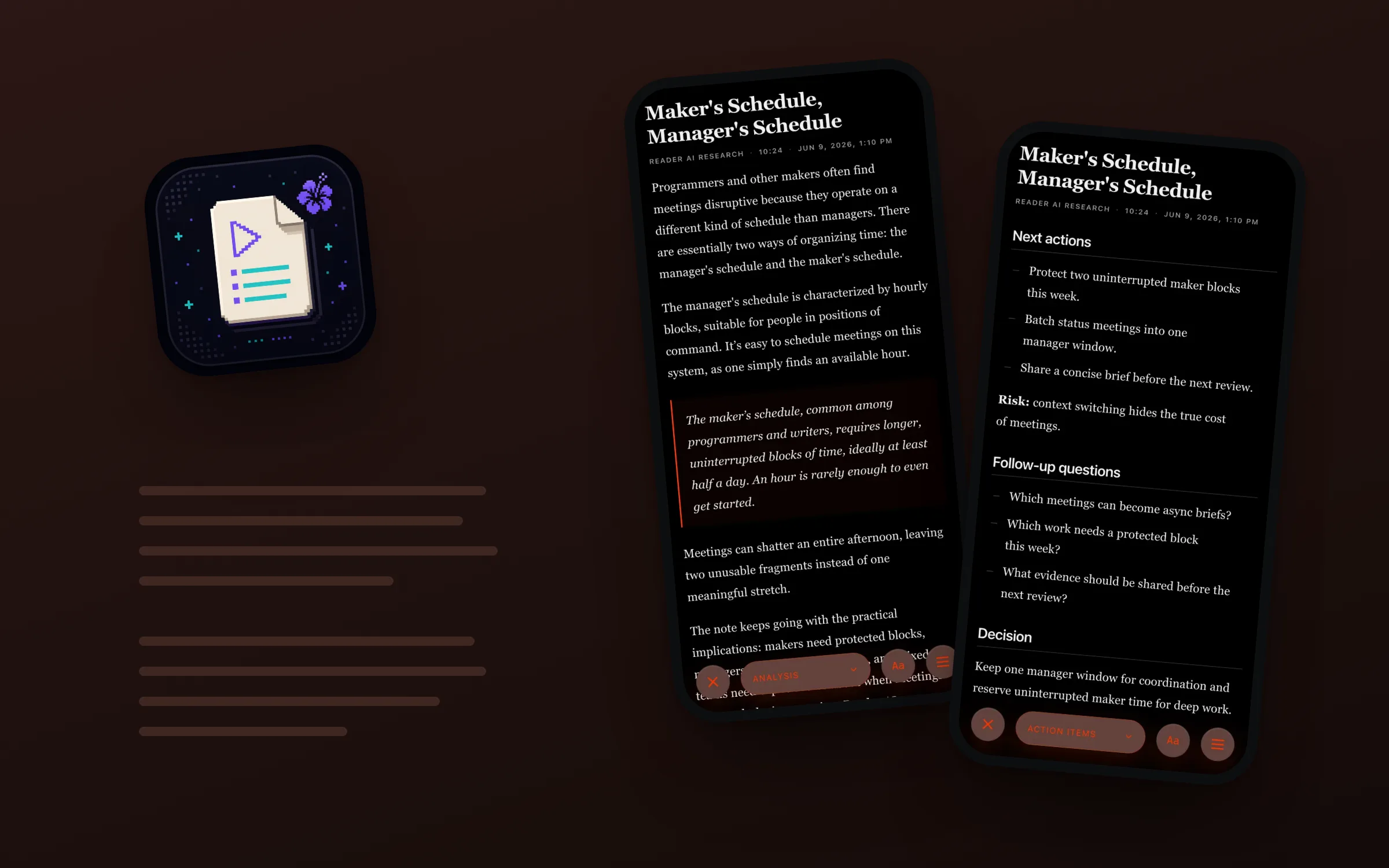
Before that, at Lane Technologies, I built the mobile release infrastructure that kept releases reliable as their tenant-experience platform scaled.
“Kuan was able to quickly and effectively respond to the requests of our customers as well as identify their potential needs even before they were apparent.”
Is this right for you?
It works best when:
- You have an existing business, service, audience or product, and evidence people use it.
- There’s one main user and one workflow that matters commercially.
- A decision-maker can give it 2 to 3 hours a week, with store accounts, content and legal details ready.
- There’s a clear reason it needs to be mobile.
It isn’t the right fit for an idea with no users yet, for several unrelated apps at once, or for complex offline sync, real-time collaboration, special hardware or regulated work inside the standard first app.
What happens next
Tell us what already works, who needs the app, and the one thing it has to get done. It starts with two quick questions, and then you can book a fit call or keep writing.