Operating problem
Maintenance calls arrive at every hour. Small property managers either pass an on-call phone around or pay an answering service by the minute for messages, and a burst pipe at 2 a.m. gets the same voicemail as a dripping tap.
What changed
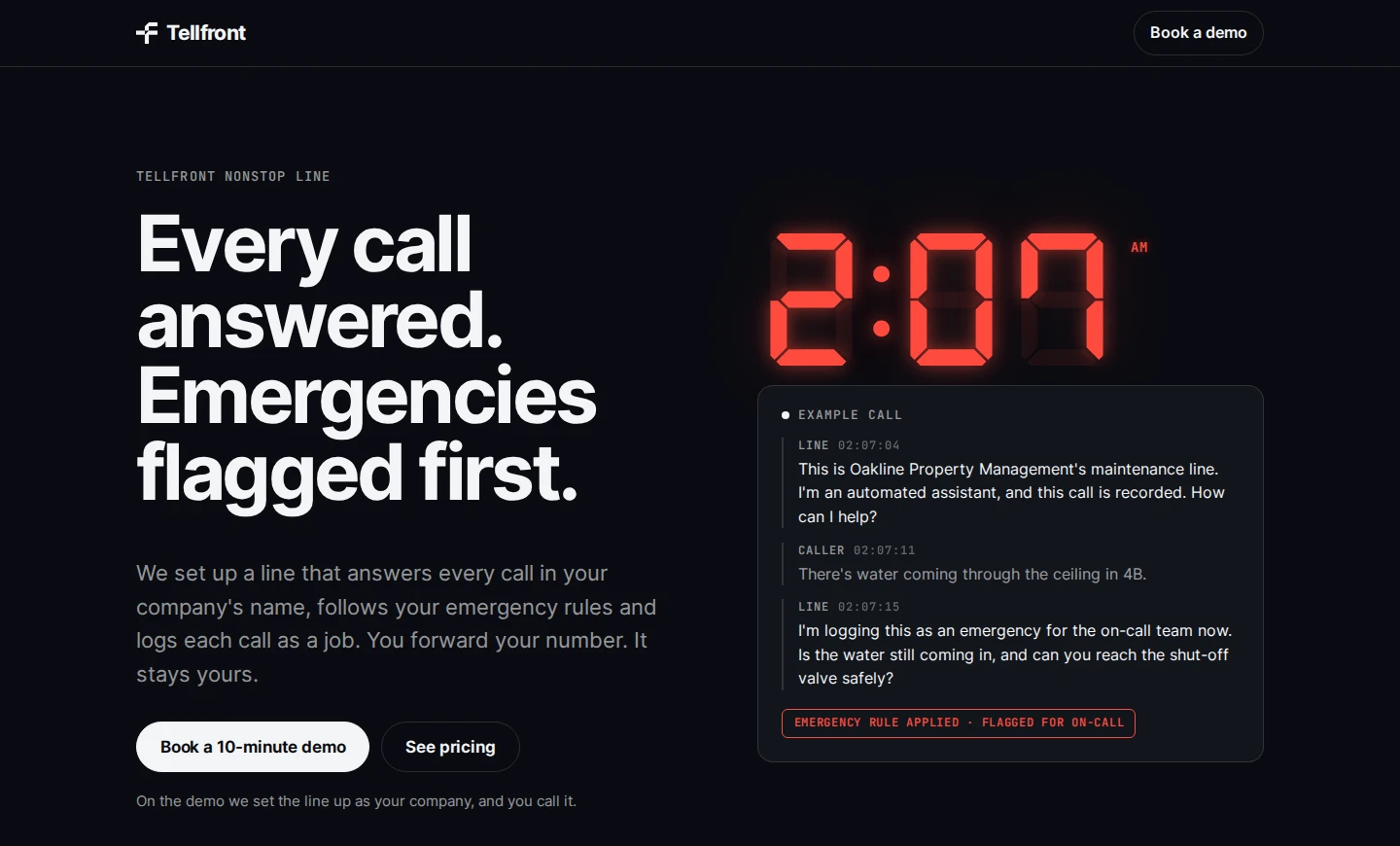
The line is set up from the company's own emergency list or resident handbook. It opens every call by saying it is an automated assistant and the call is recorded, sorts emergencies from routine requests by those rules, and logs each call with the caller, the address, and the full transcript. Emergencies are flagged for the on-call team; spending, legal matters, and danger always go to a person.
System scope
- Voice line with an opening disclosure, emergency rules, and call limits
- Call log with a job, address, and transcript for every call
- Per-prospect demo: the line becomes the prospect's company, with synthetic data for one of six cities
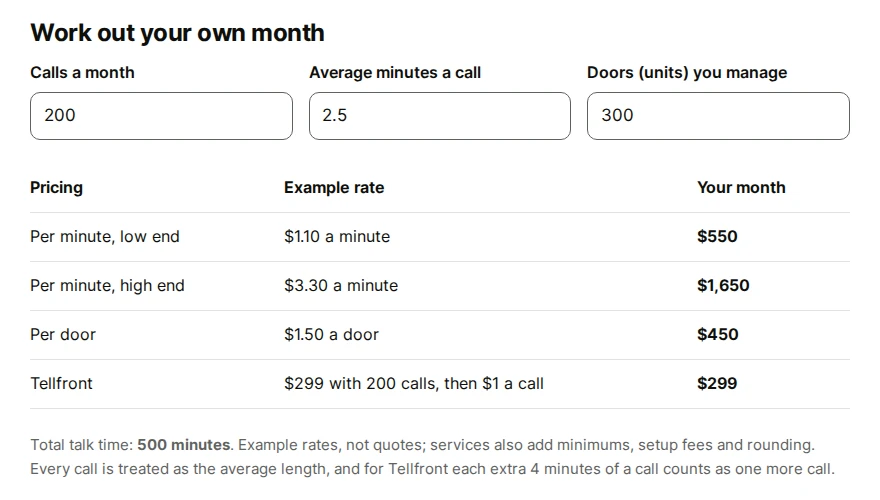
- Public site with search pages, templates, and a cost calculator
Technical constraints
- Tell callers at the start of every call that they are talking to an automated assistant and being recorded.
- Apply each company's own emergency rules the same way at 3 a.m. as at 3 p.m., and leave money, legal, and safety decisions to people.
- Turn the demo into a prospect's company in one step, with synthetic data that matches their city.
Evidence
- Public site
- tellfront.com, US$299 a month with 200 calls included.