
Operating problem
A checklist says what should happen, but rarely preserves which version someone followed, where the work stopped, or who completed it. Agent-assisted work adds another need: explicit boundaries around consequential actions.
What changed
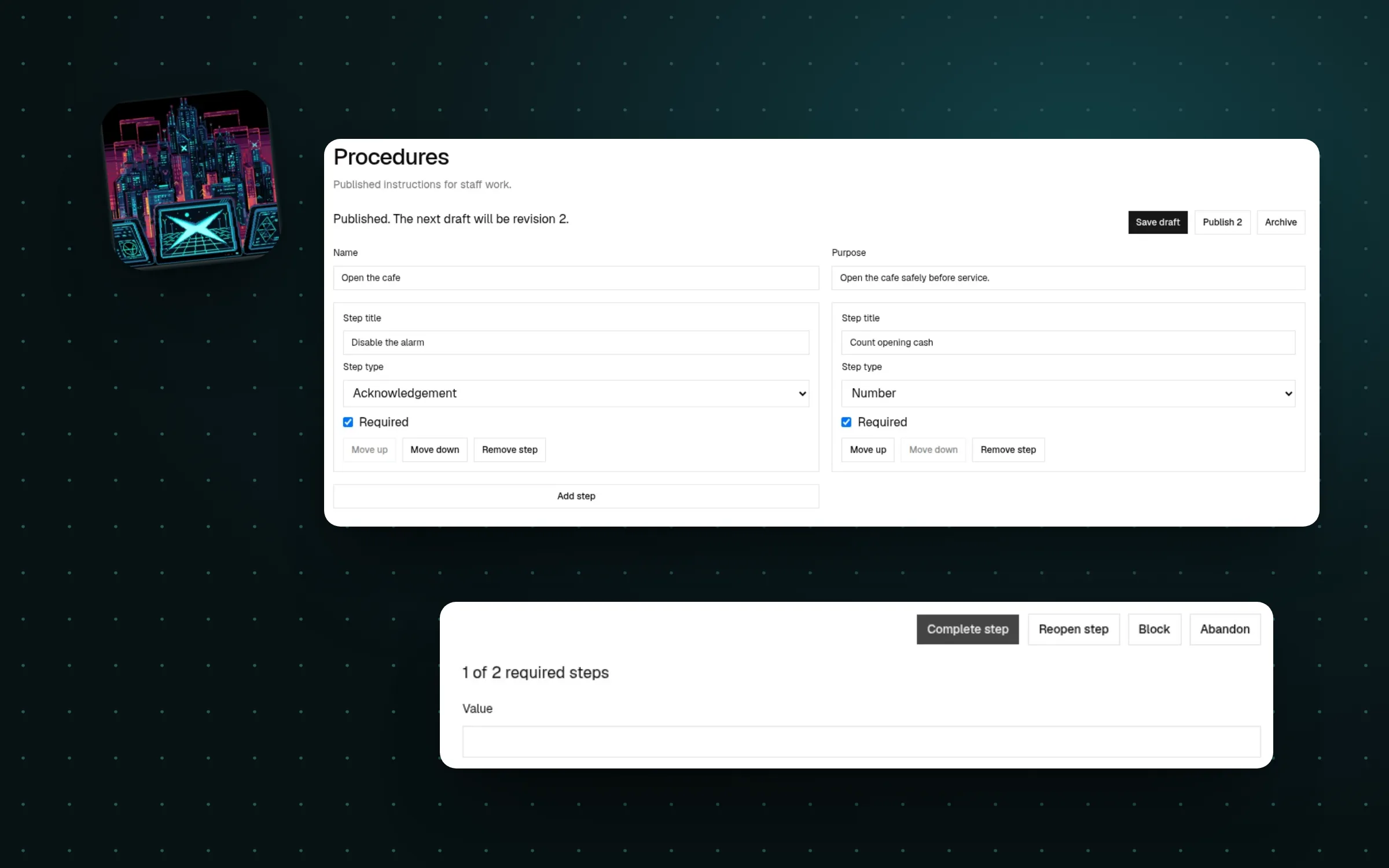
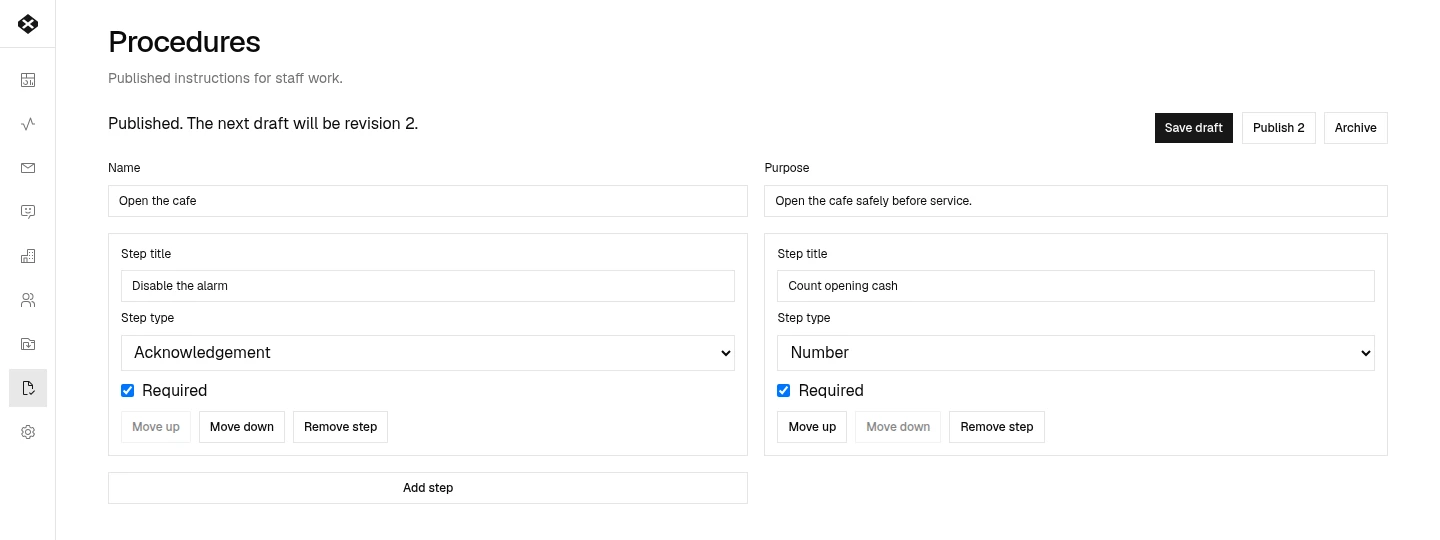
Kuan designed the workspace and built its supporting systems: relationship records, research, operating procedures, and review controls. This example follows a cafe-opening procedure from configuration into staff execution and history.
System scope
- Product and interface design
- Relationship records and durable research
- Versioned procedures and staff execution
- Agent tooling with human review
Technical constraints
- Preserve the revision attached to a run when the underlying procedure changes.
- Keep workspace permissions, required steps, and unresolved blockers explicit.
- Make the same operational record useful to people and agent-assisted tools.
Evidence
- Built
- Procedure editing, publishing, assignment, step completion, blockers, and run history.
- Available
- The workspace at xevol.com, a CLI, and a browser extension.
Technical foundation
- Interface
- React and TypeScript with shared UI components, localized routes, and query-backed procedure views.
- Operating model
- Workspace-scoped procedures, revisions, assigned runs, step state, and event history.
Key decisions
- Separate instructions from execution
- A published revision and an individual run are different records. This preserves which instructions were followed as the procedure evolves.
- Make unfinished work visible
- Required steps, blockers, abandonment, and completion are distinct states. A blocked run does not become a successful result.
- Use structured work, not just chat
- Typed inputs and explicit actions give people a reviewable record. Agent tooling supplements that record rather than replacing it with a conversation.